




Why Automated Car Parking Systems Are Becoming Essential in Saudi Arabia
Automated car parking systems are transforming how cities manage one of their most pressing challenges: the limited nature of parking space. These advanced solutions direct motorists to available spots faster and more efficiently, significantly reducing the time spent searching for parking. For property developers and urban planners, this technology offers a practical answer to growing demands in congested areas.
Saudi Arabia’s rapid urbanization and increasing vehicle ownership have intensified car parking challenges across major cities. This article explores how automated parking technology works, why it has become essential for the Kingdom’s urban development, and how these systems align with Vision 2030 goals. Furthermore, readers will discover the space optimization benefits, cost savings, and implementation strategies shaping the future of parking infrastructure in Saudi Arabia.
The Growing Parking Challenges in Saudi Arabia
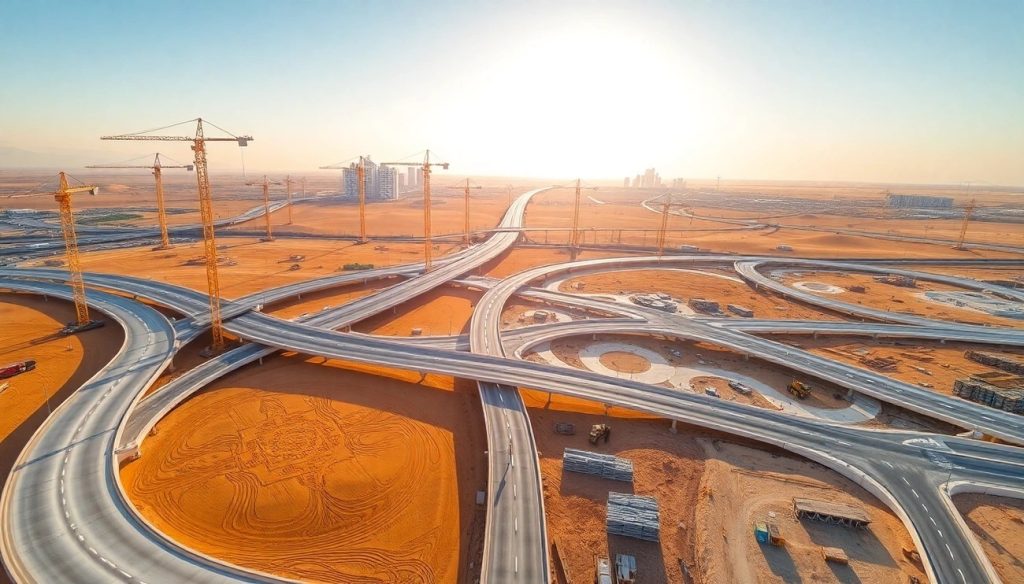
Rapid urbanization and population growth
Saudi Arabia has witnessed extraordinary demographic shifts over recent decades. The urban population tripled from 9.32 million in 1980 to 29.8 million in 2014. This growth trajectory shows no signs of slowing, with projections indicating urbanization will reach 97.6% by 2030. Currently, 85.17% of the population resides in urban areas.
Most residents concentrate in major metropolitan centers. Riyadh, Jeddah, Dammam, and the holy cities of Mecca and Medina house the majority of this urban population. The Eastern Province leads regional urbanization at 93.2%, followed by Riyadh at 90.9%. The number of cities across the Kingdom expanded from 58 in 1936 to 285 in 2015, spreading across 13 regions and 118 governorates.
Increasing vehicle ownership rates
High income levels and spatial expansion have fueled substantial growth in private vehicle dependency. The average household in Saudi Arabia owns 1.38 cars. Approximately 625,000 new vehicles were registered in 2023, a notable increase from around 540,000 units in 2022. This surge reflects economic recovery and government spending initiatives.
The automotive market continues expanding, with demand forecasted to reach approximately 619,000 units by 2025. Growing female driver participation, rising income levels, and tourism expansion contribute to this demand. In light of deficient public transportation systems, private vehicles remain the primary mode of transport across urban areas.
Limited parking space in major cities
Car dependency has created severe infrastructure gaps. Surface lots and under-regulated on-street spaces dominate the parking landscape, while structured and automated facilities remain limited. Parking provision lacks integration with land use planning, and requirements fail to reflect different densities or land uses across cities.
Free parking prevails throughout most urban areas, with vast on-street spaces lining main roads adjacent to commercial developments. However, this abundance proves deceptive. During peak hours in business districts, finding available spots becomes difficult despite the quantities available.
Traffic congestion from parking search time
The consequences extend beyond mere inconvenience. Drivers waste more than 55 hours annually searching for parking. Studies reveal that up to 30% of traffic in urban areas results from motorists circling blocks in search of available spots. During peak hours, drivers spend more than 20 minutes on average trying to locate parking.
This search activity costs consumers and local economies nearly SAR 2,247.55 million annually in wasted time and fuel. Double parking blocks lanes needed by moving traffic, limiting road capacity. Parking maneuvers delay traffic flow, reducing speed and capacity across multiple lanes.
What Are Automated Car Parking Systems
How automated parking systems work
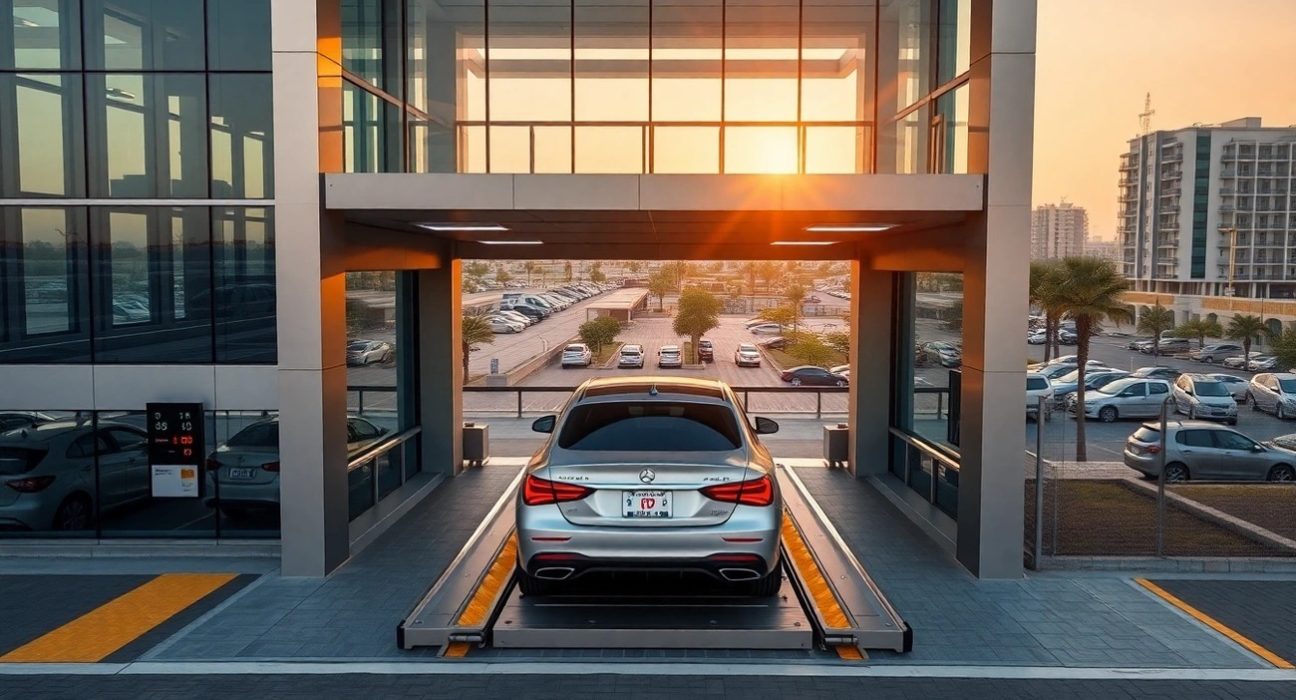
An automated car parking system relies on mechanical processes to transport vehicles from entry points to designated parking spaces without human intervention. The driver approaches a designated parking bay, an enclosed area with a rolling door. Once inside, advanced sensors measure the vehicle’s dimensions, wheelbase, and position. After the driver exits, the system can be activated through a mobile app, kiosk, or access card.
The rolling door closes and sensors verify the area is clear before engaging the robotic mechanism. A smart shuttle or conveyor carefully lifts the vehicle and transports it to the storage area. The entire parking process takes as low as 30 seconds. When retrieval is needed, the driver initiates a request through the app or kiosk, and the system delivers the car back to a bay with the vehicle facing outward, eliminating the need to reverse.
Key components and technology
These systems integrate several technological elements. Sensors constantly monitor vehicle position and placement throughout the storage and retrieval process. Shuttles, conveyors, and lifts form the mechanical transport infrastructure. Control systems powered by programmable logic software coordinate all movements. User interfaces include mobile applications and kiosks that provide real-time status updates during parking and retrieval.
To learn more about automated car parking systems, check our blog Car Parking Guidance Systems: What and Why
Types of automated parking solutions
Fully automated systems utilize robotics, shuttles, lifts, or conveyors to handle vehicles autonomously. Puzzle parking systems operate semi-automatically, moving vehicles both vertically and horizontally through a grid of shifting platforms. Stacker parking provides vertical solutions where multiple vehicles park on platforms within compact structures. Tower parking uses vertical lifts controlled by computer systems. Robotic parking employs robotic arms equipped with sensors to pick up and position vehicles.
Why Automated Parking Systems Are Essential for Saudi Arabia
Space optimization in dense urban areas
Property developers face mounting pressure to maximize every square meter of available land. Automated car parking systems deliver substantial spatial advantages by stacking vehicles vertically and eliminating ramps and wide aisles. These facilities can provide up to twice the parking capacity of conventional structures within the same footprint. The average space requirement drops to 225 square feet per vehicle, compared to 350 square feet for traditional garages.
The design flexibility allows installation in locations where conventional solutions prove unfeasible. Narrow strips, deep plots, and irregularly shaped spaces become viable parking sites. This adaptability proves valuable in Saudi Arabia’s dense commercial districts where land commands premium prices.
Cost savings for property developers
Beyond space efficiency, automated systems reduce construction expenses through smaller structural requirements. The absence of driver circulation eliminates the need for extensive lighting, ventilation, and fire suppression systems in storage areas. Building materials decrease proportionally, and pre-fabricated components accelerate construction timelines. This speed reduces interest costs during development and enables faster revenue generation.
Operational expenses remain comparably low. Without human traffic, maintenance needs diminish substantially. Additionally, accelerated depreciation schedules on mechanical equipment offer tax advantages unavailable to conventional parking structures.
Enhanced security and vehicle protection
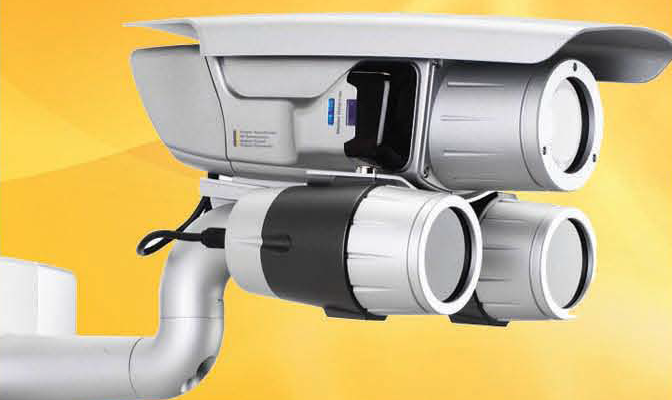
Automated facilities restrict human access to parked vehicles, creating controlled environments where only authorized personnel enter storage zones. Vandalism and theft become virtually impossible under these conditions. Advanced surveillance systems and license plate recognition provide additional protection layers. Driver-related accidents, including collisions and scratches from tight maneuvering, disappear entirely.
Reduced carbon emissions and environmental benefits
Environmental gains emerge from eliminating circulating engines within parking facilities. Greenhouse gas reductions range from 60 to 85 percent, with some installations reporting up to 83 percent lower carbon emissions. Vehicles enter and exit without idling or searching, directly cutting fuel consumption and pollutant output.
Alignment with Saudi Vision 2030 goals
The Kingdom’s strategic framework prioritizes livability, mobility, and sustainability in urban development. Automated parking systems support these objectives through reduced congestion and improved air quality. The market value for automated parking is projected to reach SAR 543.16 million by 2030, reflecting substantial investment in smart city infrastructure that advances Vision 2030 targets.
Implementation and Future of Automated Parking in Saudi Arabia
Smart city integration opportunities
Riyadh launched a 164,000-space smart parking initiative spanning 12 zones in collaboration with stc solutions and Remat Al-Riyadh, with Phase I covering over 24,000 new public spaces. Automated parking now connects with public transport networks, shared mobility services, and EV charging stations. Check Abdulrahman Alshareef Group’s website for more information about car parking systems tailored to specific project requirements.
Challenges and solutions for implementation
Regulations introduced in 2023 mandate smart parking integration in new urban developments, transforming adoption from optional to required infrastructure.
Conclusion
Automated parking systems address Saudi Arabia’s most pressing urban challenges through space optimization, cost efficiency, and environmental benefits. As shown above, these technologies deliver up to twice the parking capacity while reducing carbon emissions by over 60 percent. The Kingdom’s commitment to smart infrastructure makes automated solutions essential rather than optional for developers and city planners. Property developers seeking to implement these systems should explore specialized solutions without delay. Check Abdulrahman Alshareef Group’s website for more information about car parking systems tailored to specific project requirements and Vision 2030 objectives.