



What is Building management system and why is it growing in Saudi Arabia
Buildings without modern building control systems consume 10-30% more energy than those equipped with these technologies. This unnecessary waste translates to higher operational costs and increased environmental impact. A Building Management System (BMS), or building automation and control systems, solves this problem by monitoring and controlling critical infrastructure like HVAC, lighting, security, and energy meters.
With this in mind, we’re seeing rapid adoption of BMS technology across Saudi Arabia, particularly in major cities such as Riyadh, Jeddah, and Dammam. Vision 2030’s smart city initiatives, extreme climate demands, and growing commercial sectors are driving this transformation.
In this guide, we’ll explore what building access control systems are, their key benefits, why Saudi Arabia is embracing this technology, and real-world applications across different building types.
What is a building management system (BMS)?
A building management system centralizes the monitoring and control of mechanical, electrical, and plumbing systems through integrated software and hardware platforms. These automated building control systems manage HVAC, lighting, power distribution, fire safety, and security infrastructure from a unified control layer.
Core components of a building management system
Five essential components form the foundation of building automation and control systems. Sensors and detectors measure temperature, humidity, occupancy, CO₂ levels, and air quality throughout the facility. Controllers process incoming sensor data and execute decisions using direct digital control (DDC) technology or programmable logic controllers (PLCs). Actuators and output devices convert digital commands into physical actions, adjusting valves, dampers, and motors. Communication protocols like BACnet and Modbus enable seamless data exchange between components. User interfaces provide facility managers with dashboards for monitoring, adjusting settings, and responding to system alerts.
The software layer includes automation rules engines that trigger actions based on preset conditions, alarm management for fault detection, and data logging tools for performance tracking. Modern systems incorporate machine learning algorithms to identify optimization patterns.
How building automation and control systems work
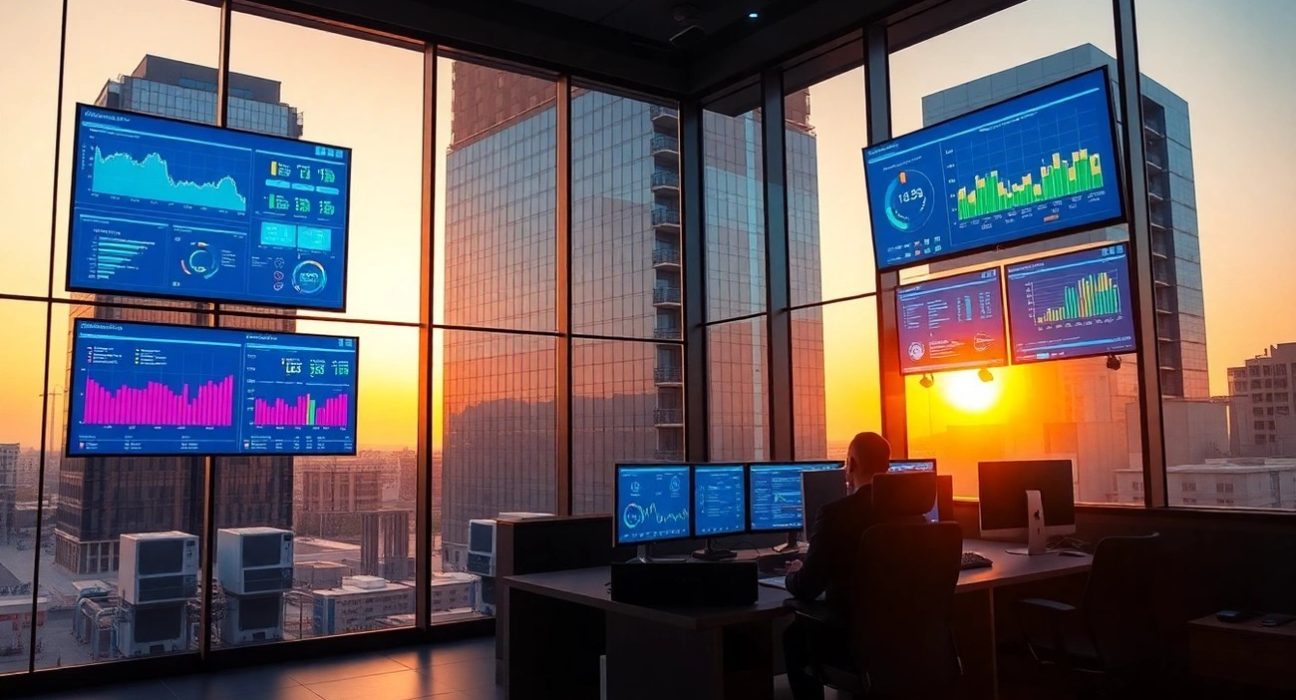
Building control systems operate through a continuous four-step cycle. Sensors collect real-time environmental data across zones. Controllers then apply internal logic engines, comparing sensor inputs against setpoints and predetermined schedules. Based on threshold responses, time-based rules, or feedback control loops, the system decides required actions. Actuators execute these commands instantly, dimming lights, adjusting ventilation rates, or opening dampers. All activity displays on centralized dashboards accessible via browser or mobile applications.
When temperature exceeds defined limits, controllers automatically signal HVAC units to increase cooling. Similarly, occupancy sensors trigger lighting adjustments in unoccupied areas. The closed-loop control operates continuously without manual intervention.
Key benefits of implementing a building management system
Implementing building automation and control systems delivers measurable operational improvements across multiple dimensions. These benefits extend beyond basic automation to create substantial value for facility owners and occupants.
Energy cost reduction
Building automation and control systems reduce energy consumption by 20-40% through intelligent scheduling and demand-responsive adjustments. HVAC optimization alone achieves 15-25% energy savings, while lighting automation contributes an additional 20-30% reduction. Buildings equipped with efficient BMS can lower energy costs by 20-30% annually, with some facilities reporting up to 35% reduction in total consumption. The International Energy Agency reports that buildings account for 30% of global energy consumption and 27% of total energy sector emissions.
Real-time monitoring and control
Centralized dashboards provide facility managers with 24/7 access to system performance data. Building control systems deliver immediate responses to irregularities, inefficiencies, or potential failures before they escalate. This visibility enables automated adjustments based on occupancy patterns, environmental conditions, and energy demand. Remote monitoring capabilities allow teams to detect and resolve issues from any location.
Enhanced occupant comfort
Building automation and control systems regulate temperature, humidity, and air quality to maintain optimal indoor environments. Temperature accuracy reaches within 0.5°C compared to typical building standards of 2°C. Furthermore, controlled airflow and ventilation adjustments respond to CO₂ levels and occupancy in real time. These conditions directly impact productivity, health, and satisfaction among building occupants.
Streamlined maintenance operations
Predictive maintenance reduces costs by 25-35% within the first two years of deployment. Building control systems identify potential equipment failures before they occur, accordingly minimizing emergency repair expenses. Equipment lifespan extends through continuous performance optimization and reduced wear.
Environmental sustainability
Building automation and control systems support LEED and BREEAM certification efforts by monitoring carbon footprint and resource consumption. Accordingly, these systems contribute to Vision 2030’s sustainability objectives across Riyadh, Jeddah, and Dammam.
Why Saudi Arabia is adopting building management system technology
Saudi Arabia’s building automation systems market is expanding from SAR 8.02 billion to SAR 19.89 billion by 2032, growing at 15.16% annually. This growth reflects a national transformation driven by infrastructure demands, climate realities, and economic diversification goals.
Vision 2030 and smart city initiatives
The Ministry of Municipalities and Housing launched an initiative to modernize over 4,600 municipal buildings, targeting a 20-30% reduction in operating costs through smart energy meters connected to centralized dashboards. Smart city projects across Riyadh, Jeddah, and Dammam are transforming urban infrastructure, with the smart cities market projected to reach SAR 55.21 Billion by 2027. These initiatives emphasize data-driven decision-making, performance monitoring through the Balady platform, and Building Performance Certificates for accountability.
Extreme climate conditions in Riyadh, Jeddah, and Dammam
Summer temperatures routinely exceed 45°C, with some regions approaching 50°C. HVAC cooling loads represent 60 to 70% of total energy expenditure in industrial and commercial facilities. Five distinct climatic zones across Dhahran, Guriat, Riyadh, Jeddah, and Khamis Mushait require tailored building control systems approaches. Air conditioning accounts for more than 60% of energy consumption in residential buildings.
Energy efficiency requirements
The government mandates energy audits for buildings over 500 m² to establish Energy Use Intensity benchmarks following ASHRAE 100 and ISO 50001 standards. Twenty-six energy efficiency specifications regulate products including thermal insulation materials and air conditioning systems.
Growing commercial and residential sectors
Construction output reached SAR 181 billion, with residential developments accounting for SAR 162.95 billion in 2023, projected to grow to SAR 213.14 billion by 2028. Annual housing demand maintains 300,000 units. A SAR 4.87 trillion project pipeline drives demand for automated building control systems.
Government regulations and incentives
Incentive programs cover up to 80% of project costs, with a maximum grant of 300,000 Saudi Riyals.
Building management system applications across Saudi Arabian buildings
Across Saudi Arabia, building automation and control systems serve diverse sectors with specialized requirements. From Riyadh’s commercial districts to Jeddah’s industrial zones, these technologies adapt to unique operational demands.
Commercial buildings and office towers
Office towers, shopping malls, and mixed-use developments deploy building control systems to manage HVAC, lighting, and occupancy-based automation. Hotels and resorts prioritize energy efficiency alongside guest comfort through integrated environmental controls.
Residential complexes and gated communities
Smart homes, gated communities, and high-rise apartments implement building automation and control systems for climate management, security integration, and resource optimization. Residential applications focus on occupant comfort while reducing utility consumption.
Industrial facilities and manufacturing plants
Factories and warehouses with high energy demands utilize building control systems to monitor production environments, manage security infrastructure, and optimize power distribution.
Healthcare and educational institutions
Hospitals and clinics require precise climate control, security protocols, and safety compliance. Real-time location systems track staff, patients, and equipment while maintaining temperature, humidity, and pressurization standards. Building control systems in healthcare predict challenges, respond to changing conditions, and deliver regulatory reports.
Building access control systems integration
Building access control systems integrate with BMS via BACnet protocol, enabling unified monitoring from centralized interfaces. When access events occur, systems automatically adjust HVAC and lighting based on occupancy, reducing energy waste. Security breaches trigger automated responses including door locks and environmental control modifications.
Conclusion
Building automation and control systems represent a smart investment for Saudi Arabia’s growing infrastructure. With this purpose in mind, we’ve seen how these technologies deliver 20-40% energy savings while improving occupant comfort and operational efficiency. As Riyadh, Jeddah, and Dammam continue expanding under Vision 2030, BMS adoption will become essential rather than optional. Whether you manage commercial towers, residential complexes, or industrial facilities, implementing building control systems positions your property for long-term sustainability and cost savings.
At Abdulrahman Alshareef Group, we provide building management systems and solutions, for consultation or more information, please visit our website www.alshareefgroup.com
Or contact us on: (+966) 53 777 5708