




Abdulrahman Alshareef Group’s Influence on Infrastructure in Saudi Arabia
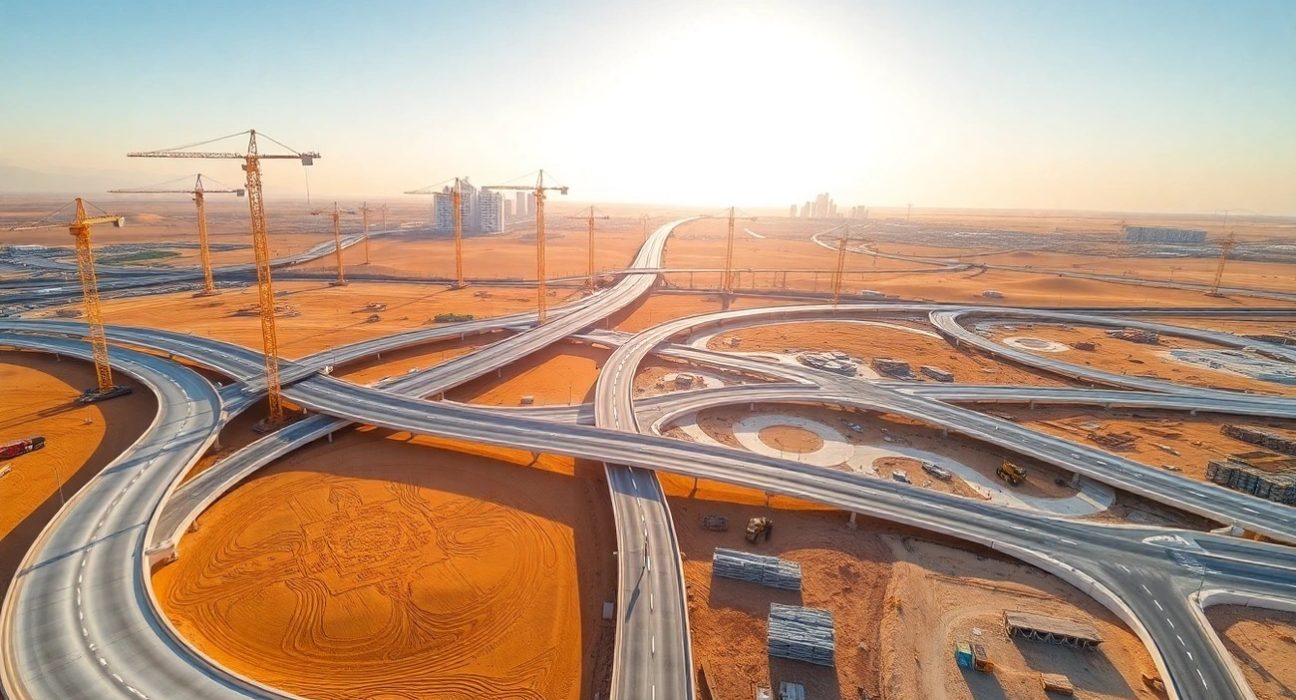
Infrastructure development Saudi Arabia is experiencing unprecedented growth as established contractors expand their civil engineering capabilities to meet national transformation goals. Abdulrahman Al-Shareef Group, established in 1988 in Jeddah as a pioneering company in communications and network systems, has evolved into a comprehensive infrastructure provider. The company delivers general contracting services backed by professional experts with decades of field experience. Additionally, Abdulrahman Alshareef Group focuses on converged networking, cloud computing, and surveillance solutions alongside traditional civil works. Their strategic vision emphasizes delivering innovative and integrated solutions while supporting Saudi Arabia’s Vision 2030 objectives. This article examines how Abdulrahman Alshareef Group’s infrastructure expansion aligns with national development priorities, the technologies driving their construction innovation, and the sectors positioned to benefit from this growth.
Abdulrahman Alshareef Group Major Infrastructure Expansion
Company Background and Core Capabilities
Abdul Rahman Al Shareef Group began operations as a communications and electronics specialist with headquarters positioned in Jeddah. The organization subsequently expanded its activity portfolio to encompass more than seven distinct operational fields. These divisions include electronics and communication services, general contracting, electro-mechanical works, flooring systems, tools and construction supply, renewable energy, and e-commerce.
The company earned ISO 9001 QMS certification, demonstrating adherence to international quality management standards. Management responsibilities rest with highly motivated professionals recognized as leaders within their respective technical domains. The organizational structure supports operations across multiple geographic markets, with the parent Al Sharif Group maintaining a prestigious status and presence throughout the Saudi Kingdom.
Strategic partnerships further strengthen operational capabilities. The group functions as a strategic partner with more than five international companies, including collaborations that position it as a sister company to entities such as SIGNAL. A joint venture between KEC Al-Sharif Group and KEC Ltd executes turnkey infrastructure projects focused on power transmission and distribution works, with Saudi Electricity Company serving as the primary client. Project execution has occurred across diverse terrain locations including Riyadh, Makkah, Najran, Jizan, Abha, and Qassim.
Strategic Focus on Civil Engineering
The organization provides innovative solutions spanning communications, network systems, information technology, construction services, and drone solutions. Technical expertise centers on delivering scalable, cost-effective, and reliable infrastructure while transforming operational challenges into strategic opportunities.
How Does This Development Align with Saudi Arabia’s Vision 2030?
Infrastructure as Economic Diversification Catalyst
Vision 2030 positions infrastructure development as a main priority for Saudi economic diversification. The construction sector supports this transformation, with over SAR 3.75 trillion worth of projects currently underway across the Kingdom. These investments extend beyond traditional oil dependency, creating job opportunities across tourism, technology, and entertainment sectors while establishing the nation as a global hub for innovation and investment.
The Public Investment Fund reached SAR 3.52 trillion in assets by 2024, representing a 390% increase since 2016 with a compound annual growth rate of 22%. This financial capacity enables execution of mega-projects spanning NEOM, Qiddiya, and the Red Sea Development, each requiring advanced civil engineering capabilities and integrated infrastructure solutions.
Smart City Integration and Digital Transformation
Digital technologies drive project execution efficiency as the Saudi Contractors Authority implements its digital transformation strategy. Giga-projects like NEOM set new standards through incorporation of AI, robotics, and 3D printing. The Kingdom extended 500 kilometers of fiber optics while building data centers and energy infrastructure to support digitization requirements.
Smart city development integrates AI, IoT, and digital systems for urban management. These innovations enable faster project delivery, improved safety compliance, cost savings through automation, and enhanced sustainability through digital planning.
Sustainability Standards in Modern Construction
The Saudi Green Initiative, launched in 2021, targets net zero emissions by 2060. This whole-of-society initiative activated 77 programs representing investment exceeding SAR 696.74 billion. Three overarching targets guide implementation: emissions reduction, afforestation, and land and sea protection.
Green building standards gained prominence through the Saudi Green Building Forum and International Green Construction Code implementation. Proper enforcement by local authorities ensures safety and sustainability of the built environment.
Timeline for Project Completion
Vision 2030 projects progress through defined phases, with NEOM targeting 2030 for first phase completion. Qiddiya City and multiple residential developments maintain similar timelines, requiring coordinated execution across civil works, digital infrastructure, and sustainability compliance.
What Technologies Drive Abdulrahman Alshareef Group’s Construction Innovation?
Advanced Communication Systems Implementation
Abdulrahman Alshareef Group integrates communications technology with civil engineering operations through dedicated focus on network systems and information technology. The company provides cutting-edge communication devices and network systems services designed to support large-scale infrastructure projects. These solutions enable project coordination across remote and challenging construction environments while maintaining reliable connectivity for operational management.
The digital solutions portfolio enhances business efficiency through smart and sustainable implementations. Project teams access scalable systems engineered for cost-effectiveness and reliability across diverse terrain conditions. This technical foundation supports Saudi Arabia’s construction sector digital transformation, where integration of digital tools becomes essential for executing mega-projects.
Drone Solutions for Site Management
Drone technology serves multiple construction management functions within Alshareef’s operational framework. Site surveys capture high-resolution aerial imagery and topographic data, facilitating creation of accurate 2D maps and 3D models for planning phases. Progress monitoring occurs through regular drone flights, enabling real-time tracking of construction adherence to schedules and budgets.
Safety inspections benefit from drone access to hazardous or hard-to-reach areas without endangering personnel. The aerial perspective assists in tracking equipment location and utilization across large sites, optimizing asset management. Stockpile measurement automation reduces manual survey requirements while minimizing errors.
Network Infrastructure Integration
Network infrastructure planning aligns with construction timelines to avoid retrofits causing delays and cost overruns. Fiber-optic infrastructure design supports high-speed connectivity from project inception, with scalable networks handling future demand without disruptive upgrades. Engineers coordinate network installation with construction milestones, ensuring broadband infrastructure deployment occurs before walls rise and roads receive paving. This integrated approach positions network connectivity as part of overall project design rather than an afterthought.
Which Sectors Will Benefit Most from Infrastructure Growth?
Transportation and Logistics Enhancement
Private sector investments approaching SAR 240 billion target the Kingdom’s transport infrastructure through privatization models. Logistics facilities expanded by 267% since 2021, with the Eastern Province hosting hubs spanning 6.3 million square meters. The National Industrial Development and Logistics Program positions Saudi Arabia as a global logistics hub connecting three continents. Rail networks will extend from 3,650 kilometers to 8,000 kilometers, while air cargo capacity reaches 4.5 million tons annually by 2030.
Residential Development Projects
Homeownership increased from 47% to more than 60% by the end of 2022 under the Housing Program. The initiative targets 70% homeownership by 2030, with over one million families receiving support through Sakani. Correspondingly, real estate development projects address housing shortfalls while creating investment opportunities across welcoming neighborhoods.
Healthcare and Education Facilities
Healthcare spending reached USD 66.6 billion in 2023. Furthermore, 100 PPP health projects valued at USD 13 billion advance over the next five years.
Tourism Infrastructure Advancement
The Red Sea Project delivers 8,000 luxury hotel rooms by 2030 across 30,000 square kilometers.
Conclusion
Abdulrahman Alshareef Group exemplifies how established contractors evolve to meet national transformation requirements. The company’s expansion from communications expertise into comprehensive civil engineering positions it as a strategic contributor to Vision 2030 objectives. Indeed, their integration of drone technology, digital systems, and advanced network infrastructure demonstrates the convergence between traditional construction and modern innovation. Multiple sectors will benefit correspondingly, as transportation networks expand, residential developments accelerate, and industrial zones receive modern infrastructure. This growth trajectory supports Saudi Arabia’s emergence as a regional hub for sustainable development and technological advancement.