





How PTT Technology Keeps Hajj Pilgrims Safe and Connected
Managing millions of pilgrims in one location requires push-to-talk technology – PTT – that delivers instant, reliable communication when seconds matter most. During Hajj in Makkah, Saudi Arabia, traditional mobile networks often buckle under extreme congestion, leaving families separated and emergency responders without dependable contact methods. Wireless communication has become the invisible backbone of successful operations today, especially in high-density environments where coordination is critical. Push-to-talk systems offer a solution that works independently of overloaded cellular infrastructure, hence enabling real-time group communication across security teams, medical personnel, and pilgrim guides. This article explores what push-to-talk apps are, how the technology works, and the specific ways it enhances safety and connectivity for millions of Hajj pilgrims each year.
What is Push-to-Talk Technology and How Does It Work
The basics of push to talk apps
Push-to-talk technology originated roughly 80 years ago with the invention of radio transceivers. Users press and hold a button to activate the microphone, transmitting their voice over radio frequencies. When they release the button, transmission stops and the device returns to receiving mode. This simple mechanism has earned several names over the decades, including push-to-speak, press-to-transmit, hold-to-speak, and toggle-to-talk.
Modern push to talk apps transform smartphones into walkie-talkies through Voice over Internet Protocol (VoIP) connections. These applications work over cellular networks (3G, 4G, 5G) and WiFi, eliminating the range limitations of traditional radio devices. The technology supports both one-to-one and one-to-many group calls, making it perfect for coordinating large teams across Saudi Arabia during Hajj.
Key components of PTT systems
The technical term for push-to-talk is half-duplex transmission, meaning users can either transmit or listen, but cannot do both simultaneously. When someone speaks, they hold the “floor” and other participants must wait their turn. This prevents multiple people from talking over each other, creating clearer communication than standard phone conversations.
PTT systems operate on various devices. Walkie-talkies and CB radios remain useful in law enforcement and transportation because they function without cellular connections. Smartphones running PTT apps offer wider coverage through cellular networks. Specialized consoles serve air traffic controllers, dispatchers, and emergency response teams.
Why PTT differs from regular mobile calls
Regular phone calls use full-duplex systems where both parties speak and hear simultaneously. In contrast, PTT’s half-duplex model requires taking turns. This structure actually speeds communication. Users skip dialing numbers, waiting for rings, and navigating voicemail. Press the button and speak. The message reaches recipients almost instantly, whether that’s one person or an entire group spread across Makkah.
Communication Challenges During Hajj in Makkah
Massive crowd density in Saudi Arabia
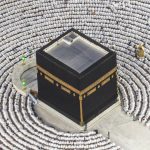
Hajj attracts two to three million pilgrims annually to Makkah, creating one of the world’s most complex logistical events. The sheer scale presents significant challenges related to crowd management, infrastructure, public safety, and connectivity that can adversely impact both the pilgrimage experience and pilgrim well-being. Overcrowding at Hajj events makes crowd control and management difficult, resulting in accidents, casualties, and traffic jams.
Approximately 250,000 vehicles substantially exacerbate travel times and road accidents during Hajj, while also escalating pollution levels that adversely affect public health. When thousands of pilgrims from around the world converge in Makkah and Mina, communication struggles often lead to confusion, fear, and delays that can disrupt this once-in-a-lifetime pilgrimage.
Network congestion during peak times
Connectivity challenges arise during Hajj due to network congestion, inadequate coverage, and infrastructure limitations, affecting both pilgrims and emergency responders. The high volume of pilgrims puts severe strain on communication infrastructure, particularly during peak times and disaster scenarios. Weak signals have led to navigation failures, putting vulnerable pilgrims at risk. This becomes especially critical during disasters, when terrestrial communication infrastructure becomes inoperable.
Public communication networks cannot provide the necessary connectivity during mass events, giving reason for alternative channels using radio frequency spectrum for local terrestrial networks.
Emergency coordination needs
Even with multilingual signs, real-time human interaction remains the biggest hurdle. Many pilgrims find themselves isolated, unable to ask for help or explain their problems. The lack of clear, multilingual communication can sometimes leave pilgrims fearful, overwhelmed, or even at risk. Poor communications can lead to people stopping, moving against crowd flow, blocking passages, or making frequent demands on staff for directions.
How Push-to-Talk Technology Enhances Pilgrim Safety
Instant group communication for separated families
Push-to-talk apps connect separated family members through one-button group communication across unlimited channels. Pilgrims select a PTT group from available channels, allowing everyone in that group to communicate instantaneously with voice messages. Users see presence indicators showing who is available or offline, avoiding wasted time trying to connect with unavailable family members. The playback option ensures no message gets missed during prayer times or crowded moments.
Real-time location tracking and monitoring
GPS mapping and location services track pilgrim movements across Makkah’s large areas, enabling early intervention when family members drift from designated routes. Automated alerts notify organizers of any deviations from expected behavior, allowing them to address potential issues before they escalate. Real-time presence features provide accurate estimates of arrival and departure times for group leaders coordinating movements between holy sites.
Emergency alert systems
Transmit priority allows designated users to override all other transmissions with urgent messages during emergencies. Staff wristbands enable personnel to press a button requesting immediate assistance, automatically calling the nearest available colleague. These systems maintain 99.99% service uptime, ensuring reliability when communication matters most. Contact Abdulrahman Alshareef Group and secure your PTT device for your next Hajj journey.
Coordination between security and medical teams
Two-way communication networks let on-site personnel report incidents by sending live video streams and images to control centers. Security and medical teams exchange information reliably to improve handling of critical incidents. Staff GPS trackers using resilient networks make it possible to locate team members across vast areas for better coordination of interventions.
Quick response to crowd management situations
Control room staff receive high-risk queue alerts and direct on-site personnel to proper intervention points. On-site staff acknowledge commands and send situation reports back as events unfold. This closed-loop system prevents overcrowding by managing crowd flow and optimizing resource deployment in real time.
Applications of PTT During Hajj
Security personnel communication networks
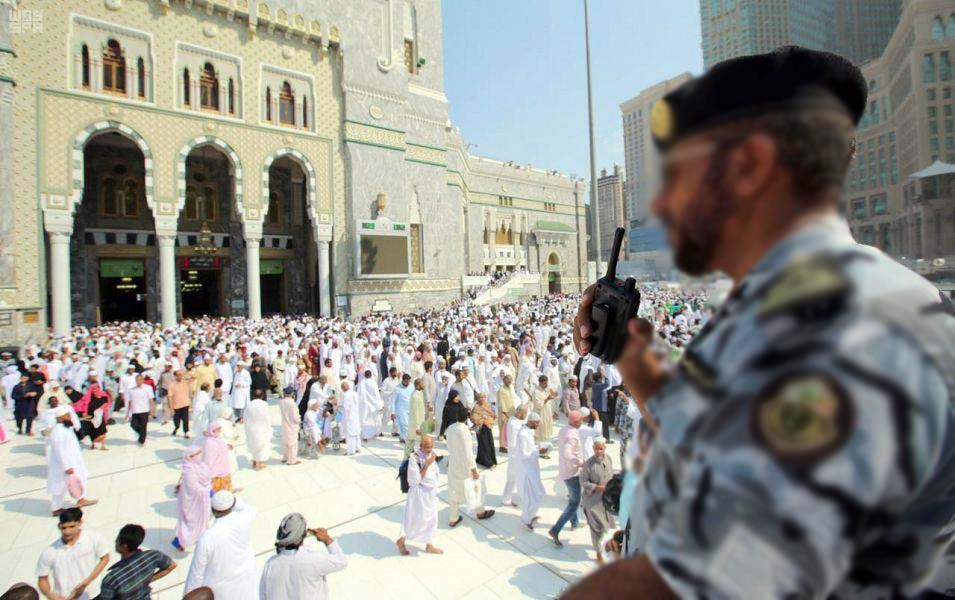
Security forces rely on push-to-talk technology to patrol Makkah’s holy sites and surrounding areas during Hajj. Officers use dedicated channels to report suspicious activities, coordinate checkpoints, and respond to incidents across dispersed locations. The instant nature of PTT allows supervisors to broadcast instructions to entire teams simultaneously, maintaining order across venues where millions gather.
Medical emergency response teams
Paramedics and first responders employ PTT systems to manage medical crises in Saudi Arabia’s crowded pilgrimage zones. Field medics transmit patient conditions to hospital coordinators while ambulance drivers receive routing updates to bypass congested roads. The technology enables triage teams to allocate resources based on severity, directing nearest available personnel to cardiac arrests, heat exhaustion cases, and injury incidents.
Pilgrim group leaders and guides
Tour operators and Hajj organizers equip group leaders with push to talk apps to shepherd pilgrims through ritual sites. Guides broadcast meeting points, prayer schedules, and safety reminders to hundreds of followers spread across Mina or Arafat. When pilgrims wander from designated areas, leaders quickly reconnect them through voice channels rather than searching physically through massive crowds.
Transportation and logistics coordination
Bus fleet managers use PTT networks to orchestrate vehicle movements between accommodations and holy sites. Drivers receive real-time route adjustments as traffic patterns shift, while loading coordinators communicate capacity limits and departure schedules across multiple pickup zones.
Abdulrahman Alshareef Group is number one provider of PTT Devices for Hajj Season
Abdulrahman Alshareef Group stands as one of the leading providers of advanced push‑to‑talk communication solutions during the Hajj season, delivering technologies designed to meet the unique demands of one of the world’s largest annual gatherings. With millions of pilgrims moving simultaneously across Makkah and the holy sites, AAG ensures seamless, reliable, and instant communication for organizers, security teams, and support staff.
The push‑to‑talk devices—powered by robust LTE and PoC platforms—enable real‑time voice, video, and group messaging, allowing teams to coordinate efficiently in crowded, high‑pressure environments. Abdulrahman Alshareef Group’s solutions are engineered for mission‑critical performance, offering encrypted channels, long battery life, and automatic network switching to maintain uninterrupted connectivity throughout long days of rituals.
By integrating their devices with modern dispatch systems and control room operations, Abdulrahman Alshareef Group enhances situational awareness and accelerates emergency response, contributing directly to the safety and comfort of pilgrims. Their specialized Hajj packages, tailored for government agencies, tour operators, and field personnel, reflect a deep understanding of the logistical and operational challenges of the pilgrimage. Through innovation, reliability, and a commitment to service excellence, Abdulrahman Alshareef Group has become an essential partner in strengthening communication infrastructure during Hajj.
Conclusion
Push-to-talk technology addresses the most pressing communication challenges that pilgrims and organizers face during Hajj. Traditional cellular networks fail under extreme congestion, but PTT systems deliver reliable instant communication when it matters most. Security teams, medical responders, and family groups all benefit from this technology that works independently of overloaded infrastructure. As a result, millions of pilgrims experience safer journeys through Makkah’s holy sites each year. Organizations managing Hajj operations should consider PTT systems an essential tool rather than an optional upgrade.
Abdulrahman Alshareef Group stands out in providing best PTT solutions tailored to individuals and campaigns during Hajj season. Their offers and packages vary to best-suit wide range of clients. Contact Abdulrahman Alshareef Group and secure your PTT device for your next Hajj journey.